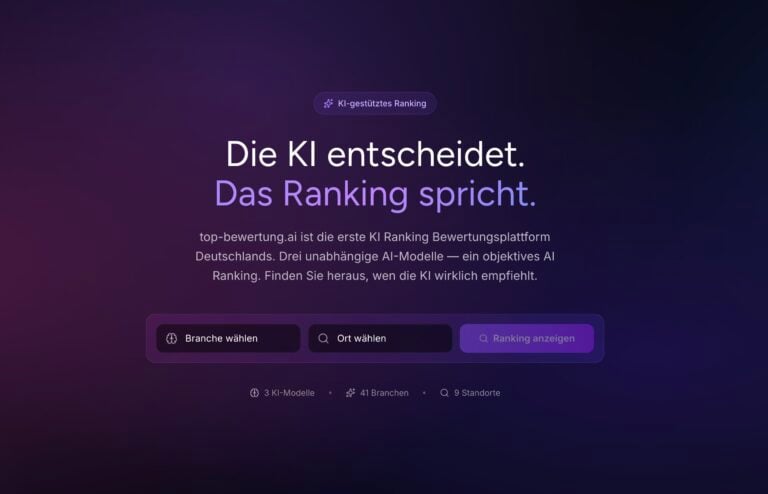
AI Search Optimisation (ASO), also known as AI search engine optimisation, refers to the strategic adaptation of digital content and websites to maximise their visibility and relevance in the ever-evolving search results generated by artificial intelligence (AI). It is an evolution of traditional search engine optimisation (SEO), specifically designed to optimise content for generative AI platforms and their output channels.
The evolution of search through artificial intelligence
At the heart of AI Search Optimisation lies the realisation that modern search engines such as Google, with its Search Generative Experience (SGE) – also known as AI Overviews – and standalone large language models (LLMs) such as ChatGPT or Google Gemini, have fundamentally changed the way users retrieve information. These AI systems process complex search queries, interpret user intent semantically and generate direct, summarised answers, rather than simply displaying lists of web pages. The primary aim of ASO is to present content in such a way that it is not only found by these AI systems, but also cited as a trustworthy source of answers and prominently featured. This effectively positions a brand or an expert as an authority that influences AI responses in an informative way.
Key components and strategies
To succeed in this AI-driven search landscape, AI Search Optimisation focuses on several strategic pillars:
- E-E-A-T (Experience, Expertise, Authoritativeness, Trustworthiness): The credibility of content and its creator is more crucial than ever for AI systems. Content must demonstrate in-depth experience, proven expertise, authority in the subject area and a high level of trustworthiness in order to be classified as citable.
- Semantic and contextual optimisation: It goes beyond individual keywords. The context of a topic must be covered comprehensively. Content should clearly define entities and precisely describe their characteristics so that AI models can unambiguously link this information.
- Structured data and Schema markup: Implementing structured data (e.g. Schema.org) helps AI systems to understand the content of a web page in a machine-readable format and to efficiently extract the most important information. This is particularly important for generating direct answers or rich snippets.
- Optimisation for natural language and conversation: As AI searches are often conversation-based (e.g. voice search or direct questions to chatbots), content must be formulated in such a way that it reflects natural language patterns and answers direct questions. Comprehensive FAQ sections are an effective way of achieving this.
- Technical SEO for AI bots: A solid technical SEO foundation, including fast loading times and mobile-friendliness, remains crucial to ensure crawling and indexing by specialised AI bots.
The role of AI tools and the outlook
AI Search Optimisation benefits enormously from the use of advanced AI tools. These utilise machine learning and natural language processing (NLP) to automate and optimise tasks such as keyword research, the generation of content recommendations, competitor analysis and technical audits. Through predictive analytics, they enable data-driven adaptation to constantly changing search algorithms and user needs.
The digital landscape is evolving rapidly. Whilst traditional search results remain relevant, the growing presence of AI-generated answers is shifting the focus. It is crucial for online marketers and businesses to continually adapt their strategies in order to remain visible and successful in the long term within the hybrid world of AI-powered and traditional search.