Off-page optimisation

Off-page optimisation, often referred to as off-site optimisation, encompasses all search engine optimisation (SEO) measures carried out outside one’s own website to sustainably improve its visibility, authority and ranking in the search results of search engines such as Google. It is the counterpart to on-page optimisation, which involves measures carried out directly on the website. The overarching aim is to strengthen the reputation and trust in a domain.

Key pillars of off-page optimisation

At the heart of off-page optimisation lies the development of a strong and topic-relevant external profile. This is achieved primarily through:

  • Backlinks: These are links from other websites to your own site. High-quality, topic-relevant backlinks from authoritative domains signal to search engines that the linked website is valuable and trustworthy. The quality of the linking sites is more important here than the sheer quantity of links.
  • Brand Mentions: Even mentions of the brand or company on external platforms – even without a direct link – can increase visibility and credibility. Search engines recognise these mentions as relevance signals.
  • E-E-A-T signals: Google’s E-E-A-T concept (Experience, Expertise, Authoritativeness, Trustworthiness) assesses the experience, expertise, authority and trustworthiness of a website and its content. Off-page measures, such as building backlinks or securing positive mentions, play a key role in strengthening these signals.

Key measures and strategies

Various measures are used to achieve the objectives of off-page optimisation:

  • Link building: This involves the strategic creation of backlinks. Active link building can be carried out through guest posts on topic-relevant blogs, digital PR, partnerships or broken link building. A natural link profile is essential here to avoid penalties from search engines.
  • Social media marketing: An active presence and engagement on social networks can boost brand awareness, generate traffic and, indirectly, send positive user signals.
  • Online reviews: Positive reviews on relevant platforms (e.g. Google Business Profile, business directories) boost trust and can enhance local visibility.
  • Digital PR: Targeted public relations work in the digital sphere can lead to high-quality mentions and backlinks on news portals, blogs or specialist media.

Off-page optimisation is an ongoing process that requires a precise strategy and continuous analysis to ensure long-term success in organic search results.

Related terms on the subject of
off-page optimisation

XML Sitemap
An XML sitemap is a file in Extensible Markup...
White Hat SEO
‘White Hat SEO’ refers to a...
RankBrain
RankBrain is a self-learning AI system developed by Google,...
Plagiarism Finder
A plagiarism detector, also known as plagiarism software or...
On-page optimisation
On-page optimisation is a fundamental component...
Online competition
The online competition describes the entirety of...
Nofollow attribute
The “nofollow attribute” is an important...
Natural Language Processing (NLP)
Natural Language Processing (NLP) is a sub-field...
Meta search term
A meta search term, often referred to as a meta keyword,...
Local SEO
Local SEO (local search engine optimisation) is a...
From our magazine

More on this topic

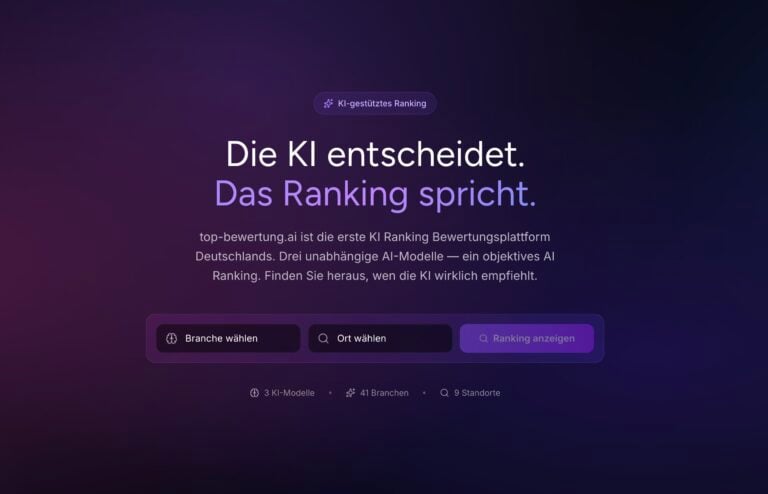
Set against a dark purple background, top-bewertung.ai displays an AI-powered ranking featuring three AI models, 41 sectors and 9 locations to help users find the right provider.
Why multi-AI consensus is the next step in supplier selection
Structured data in JSON-LD format – sample code for SEO and machine-readable information in modern AI browsers.
Structured data in SEO and AI searches
Shopify SEO as the only warmly lit shop window in a dark high street – a metaphor for online visibility.
Shopify SEO and what you can do yourself
Keeping an eye on SEO costs: a glowing bar graph in the dark as a metaphor for the price and performance of SEO
SEO Costs in 2026: What You Can Realistically Expect
A road bike with turquoise BikePass accents leans against a concrete pillar in the evening light – the cover image for the BikePass project.
The BikePass Project: A digital cycling pass for Europe
A search bar with icons for Google Chrome, Telegram and another app on a digital background.
AI browsers: Atlas, Comet – is this the future of web browsing?
An illuminated Google logo on a modern office building at night, featuring the theme ‘google.com/goto’ and ranking measurement
google.com/gotos are changing the way you measure your rankings
Close-up of a smartphone screen showing the Google search interface and the AI mode option.
Google is rolling out AI Mode in Germany
A neon-lit office backdrop featuring the Google logo; three experts are discussing the Google Core Update analysis in front of a large screen, with notepads and tablets in the background.
Google March 2026 Core Update: Interpreting volatility correctly
Three people are working in a cluttered studio/office. In the foreground on the right, a person is sitting in front of a computer displaying a code screen; in the centre, a woman wearing glasses is checking documents; on the left, another person is leaning over the table. A red ‘ON AIR’ sign—
Beyond Keywords: Rethinking content relevance