


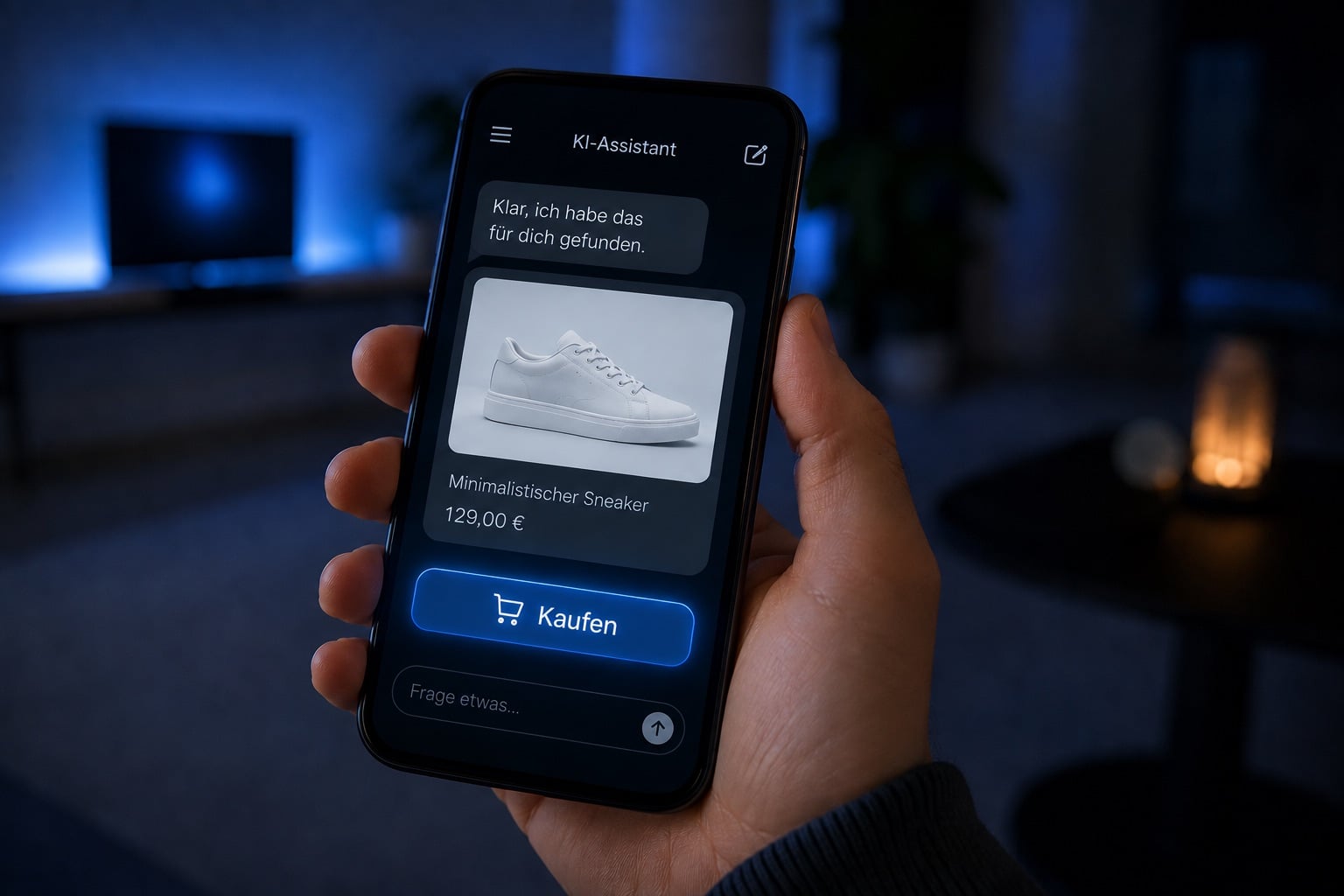
When customers delegate their product search to an assistant, the AI helps determine which brand ultimately ends up in the shopping cart. The Spring ’26 Edition addresses this very issue by connecting retailer catalogs, AI interfaces, and the Checkout to a seamless infrastructure. For you as a retailer, this means: visibility will also be created in the future where purchase decisions are made directly in the chat. Three innovations deserve the full attention of shop operators, marketing managers, and developers.
What's behind the Universal Commerce Protocol
The Universal Commerce Protocol (UCP) is an open standard that Google unveiled on January 11, 2026, at the NRF Big Show in New York. It defines a common language for products, prices, shopping carts, payment, and order status, enabling stores, apps, and AI interfaces to communicate seamlessly with one another. According to Google More than 20 partners support the standard, including Mastercard, Visa, and Zalando; it is also compatible with the Agent Payments Protocol (AP2) for secure payments through agents.
Shopify co-developed the protocol and is making it the foundation of its own ecosystem with the Spring ’26 Edition. According to Shopify The package ranges from purchasing directly in the Microsoft Copilot chat, through public MCP servers for developers, to a dedicated Agentic plan for businesses outside the platform. Amazon, Meta, Microsoft, and Salesforce have also announced their support. If, in the future, a AI Agent Does the subsequent purchase run through the same standardized infrastructure, from the first Prompt until shipping confirmation.
Shopify Catalog brings your products to AI search
With the Shopify Catalog launches a global, structured product database that makes billions of items machine-readable and serves as a search infrastructure that AI systems can query in real time. The assistants search this catalog directly, rather than laboriously crawling websites. Retailers with suitable products are automatically included, and their data flows in without the need for additional apps or manual feeds. ChatGPT, Copilot, and into the Shop App. Maintaining product data in the backend thus becomes the entry ticket to all AI channels.
Structured product data is becoming a ranking factor in AI shopping. Titles, attributes, availability, and ratings determine whether an assistant recommends your product or a competitor’s. You’re familiar with the principles behind this from AI search; it’s called Generative Engine Optimization (GEO). We demonstrated how visibility can be controlled in generative systems using Google's AI Mode already explored in detail.
What the numbers reveal about AI-powered purchasing
Traffic from AI tools to e-commerce sites is growing at a rate that surprises even optimists. According to Adobe, which analyzes over a trillion visits to US e-commerce sites, he rose in the Holiday Season 2025, a 693 percent increase compared to the previous year, with AI referrals converting 31 percent better than other channels. Those who are in E-Commerce When on the go, you get a channel with exceptionally high purchase intent, especially since visitors from AI sources spend 45 percent more time on shop pages and view more products per visit. You should keep three developments in mind:
- Consultation begins in the chat window. Users ask assistants for recommendations before opening a search engine or shop. Whoever appears there secures first contact with the sales-ready target audience.
- AI visitors are pre-qualified. The assistant has already asked about the customer's needs, budget, and preferences, so the path to a purchase decision is correspondingly shorter.
- Ad spaces are created simultaneously. With ChatGPT Ads Is OpenAI simultaneously building an advertising platform within the Assistant, including a self-service portal for advertisers?.
This is how to get your shop ready for Agentic Commerce
Agentic Commerce rewards merchants who have done their homework when it comes to data quality and visibility. Much of this also benefits SEO and AI visibility So you’re killing two birds with one stone. Getting started is manageable if you take a structured approach. Those who test early gain valuable experience while the competition is still watching from the sidelines. Four steps will get you off to a good start:
- Get product data in ordercomplete attributes, correct prices and availabilities as well as meaningful descriptions for each variant. The more precise the data, the more often assistants will recommend your product range.
- Check Catalog CompatibilityShopify merchants check in the admin whether their products meet the requirements for the Shopify Catalog. This ensures automatic deployment to all connected AI channels.
- Measuring AI TrafficIn web analytics, create your own segments for visitors from ChatGPT, Copilot, Gemini, and Perplexity to accurately attribute conversions. This is the only way to know which assistant is actually generating revenue for you.
- Perform test purchases: Ask the assistants about your products yourself and check what information and prices are displayed there. Discrepancies between your store and the AI's response indicate gaps in your product data.
FAQs on Agentic Commerce
What is Agentic Commerce?
Agentic commerce is shopping through AI agents that handle product search, comparison, and increasingly, the purchase for customers. Assistants like ChatGPT, Microsoft Copilot, or Gemini act as both the storefront and the checkout counter. The technical foundation consists of the Universal Commerce Protocol and structured product data.
What is the Universal Commerce Protocol?
The Universal Commerce Protocol (UCP) is an open standard by Google and partners like Shopify that uniformly describes products, shopping carts, payments, and order status. Introduced on January 11, 2026, at the NRF Big Show, the standard is supported by more than 20 companies, including Mastercard, Visa, and Zalando.
Are merchants automatically in the Shopify Catalog?
Yes, Shopify automatically includes shops with suitable products in the Shopify Catalog. Product data flows to ChatGPT, Microsoft Copilot, and the Shop app without additional apps or manual feeds. You can check if your items meet the requirements in the Shopify Admin.
Are AI agents already shopping independently?
Yes, in the US, AI agents are already completing purchases directly in chat, for instance, in Microsoft Copilot with Shopify Checkout running in the background. In Europe, AI is currently mainly used for product search and comparison, with the purchase itself usually taking place in the store.
How are you preparing your shop for AI assistants?
Complete, structured product data with correct prices, attributes, and availability is the most important preparation, as it forms the basis for the assistants' decisions. In addition, clean technical search engine optimization, up-to-date content, and regular test purchases are crucial, showing how your product range appears in ChatGPT, Copilot, and Gemini.