On-page optimization is a fundamental component of the Search engine optimization (SEO), which includes all measures taken directly on a website to improve its visibility in search engines such as Google and optimize the user experience. The aim is to increase the relevance of a page for certain search queries as well as its technical quality and user-friendliness. In contrast to the Offpage optimization, external factors such as Backlinks the focus is on the Onpage optimization exclusively on elements that can be controlled directly on the website.
Technical onpage factors
The technical basis of a website is crucial for its findability and performance in search engines. This includes various aspects:
- Crawlability and indexability: Search engine bots must search a website efficiently (crawl) and include their content in their index. This is achieved by a clean HTML structure, correct robots.txt instructions and an up-to-date sitemap.
- Loading times and Core Web Vitals: A quick Loading time is essential for the user experience and an important Ranking factor. Google measures this with the Core Web Vitals, which include Largest Contentful Paint (LCP) for loading performance, Interaction to Next Paint (INP) for interactivity and Cumulative Layout Shift (CLS) for visual stability. Since March 2024, INP has replaced the former First Input Delay (FID). Websites that meet these metrics offer a better user experience and have a higher chance of performing well. Rankings.
- Mobile First Indexing: Since the majority of internet usage is via mobile devices, Google primarily evaluates websites based on their mobile version. A responsive design that automatically adapts to different screen sizes is therefore essential.
- HTTPS encryption: The use of HTTPS is a basic security standard and a confirmed ranking factor. It protects data transmission between the user and the website.
- Clean source code: Error-free and semantically correct HTML code helps search engines to understand the page content.
Content and structural on-page optimization
In addition to technology, content and its structure play a central role in the success of on-page optimization:
- Keyword optimization: The relevant integration of keywords in Title tags, Meta descriptions, The use of a search engine's search engine optimization function, headings and body text helps search engines to recognize the topic of a page and assign it to suitable search queries.
- Content quality and E-E-A-T principle: High-quality, unique and useful content is a fundamental ranking factor. Google is increasingly emphasizing the E-E-A-T principle (Experience, Expertise, Authoritativeness, Trustworthiness). This means that content should be created by authors with proven experience and expertise in order to build authority and trustworthiness.
- Heading structure: A logical hierarchy of headings improves readability for users and helps search engines to grasp the structure and main topics of a page.
- Internal linking: Useful internal links distribute the „Link Juice“ within a website, strengthen the relevance of individual subpages and facilitate navigation for users and crawlers.
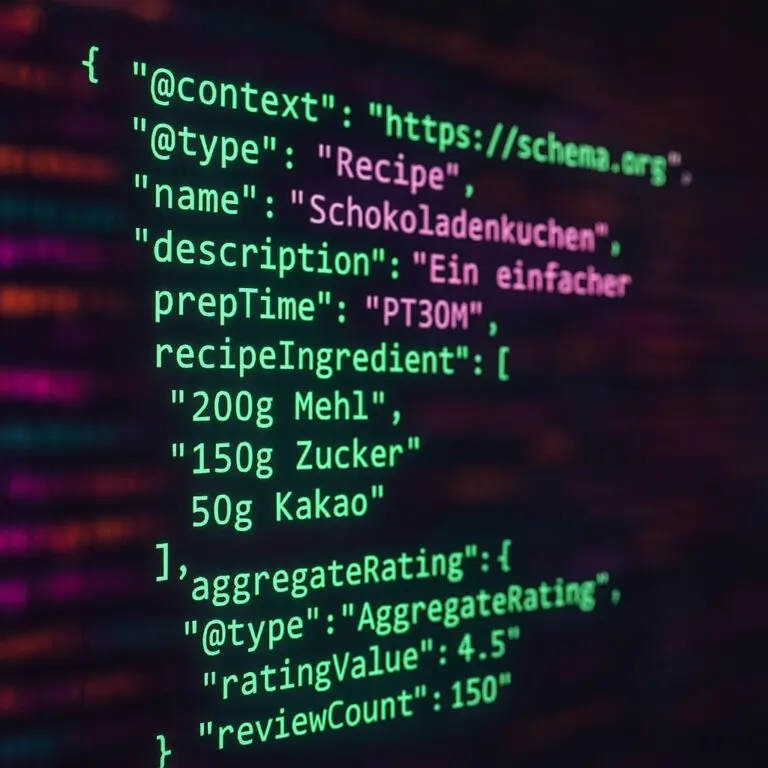
- Snippet optimization: Meaningful meta titles and meta descriptions influence the click-through rate in the Search results (CTR), even if the meta description is not a direct ranking factor. Structured data (schema markup) can further enhance the presentation of snippets.
- Image optimization: Compressed images, meaningful file names and alt attributes improve loading time, accessibility and findability in image searches.
By continuously monitoring and adjusting these on-page factors, website operators can significantly increase the performance of their presence in search engines and thus achieve higher rankings. Organic reach achieve.