
Sundar Pichai led a two-hour keynote full of announcements – from a new GeminiModel over Agentic AI in all Google services, leading to measurable improvements in the advertising business. Alphabet's business is running at full speed: The cloud business grew by 63 percent in the first quarter of 2026, and revenue from generative AI-Products increased by 800 percent year-over-year, according to Google. Spoiler: Much of this currently only applies to the US – but the pressure on marketers is growing nonetheless. Those who don't pay attention now risk missing out on making crucial decisions.
Agentic AI: The Search Becomes the Actor
Agentic AI refers to AI systems that independently complete multi-step tasks—making bookings, filling out forms, structuring research—without the user having to perform every step themselves. At Google I/O 2026, Google showed that this is precisely what the new standard will be: Gemini will be deeply embedded in YouTube, Google Maps, Google Docs, and Search, according to the announcement. WinFuture. The goal is a search that no longer waits for the user to act – it acts alongside them. For marketers, the crucial question shifts: no longer whether their own site ranks, but whether it is recommended by an AI agent.
Parallel to this, it grows AI Mode further: The feature already had 75 million daily users in January 2026 and could become the standard search experience after I/O. The AI Overviews (Google SGE) now appear in more than half of all search queries – with noticeable consequences for traffic. With AI Overview active, the Click-through rate for position 1 only 2.6 percent. 60 percent of all search queries end without a single click.
Gemini in Ads: Impressive Numbers
At I/O, Google presented concrete results of Gemini integration in the advertising business: The Campaign Resolution improved by 200 percent, the ROAS (Return on Ad Spendincreased by 35 percent according to Google. That's a substantial sum! Additionally, the partnership with Dell Technologies was expanded – a signal that Google is further scaling its infrastructure for AI-powered advertising. For advertisers on Google Ads This means: automation depth is increasing, manual control is decreasing.
Performance Max It remains the common thread: Google's AI-powered campaign format will be further automated by Gemini, with more decisions running in the background. As a result, quality signals, clean data feeds, and clear campaign goals will become more important. Those who have well-positioned Performance Max campaigns today will benefit sooner from the Gemini improvements – those who don't will notice poorer ad delivery.
Ask YouTube, Docs Live, and what that means for content
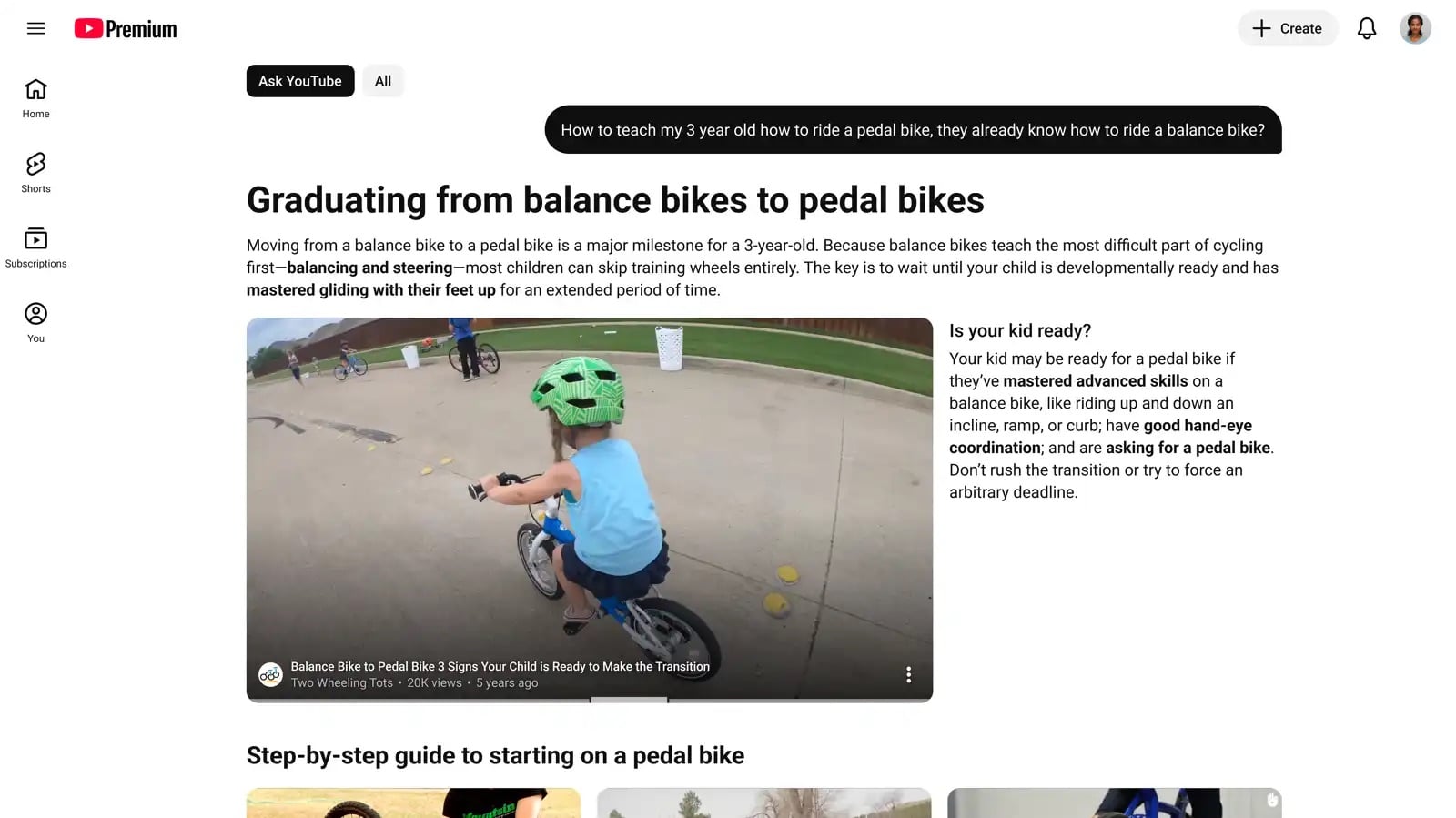
Ask YouTube is that Feature, Here are some things editors in video marketing should be thinking about starting in the summer of 2026: users will be able to query YouTube like a chatbot and receive recommended videos. The classic search algorithm will take a back seat – Content structure and topic relevance Gain weight. Docs Live makes Google Docs controllable via voice command and generates content directly from conversations. For content teams, this means: Google is further advancing AI integration in productivity tools, which has direct implications for Content Workflows has.
What's specifically relevant for marketing teams at Google I/O 2026:
- AI Mode is expected to become the standard search experience – optimized for structured, directly extractable answers
- Gemini Integration in Google Ads Improves Campaign Performance with Measurable ROAS Gains
- YouTube is changing the discoverability of video content starting in Summer 2026 in the USA.
- Docs Live automates content production with voice control and will initially roll out for English-speaking users.
- Agentic AI in Google Maps and other Google services is changing local search signals
What you can tackle now — even without a US launch
Google often rolls out many things first only for the USA or a few selected markets. Germany and Europe, based on experience, wait an additional six to twelve months for live features. But this doesn't mean you should wait. Those who lay the groundwork now will be ready when the features arrive.
- Include Google Preferred Sources: On April 30, 2026, Google launched the feature globally for all languages, including German. Those who publish regularly can integrate the official button. The click-through rate for sources marked as preferred is twice as high.
- Consistently maintain schema markup: AI Mode and AI Overviews read entities, not design. Structured data is the decisive signal for citations in AI answers.
- E-E-A-T strengths Anonymous editorial bylines are losing weight. Identifiable authors with demonstrable expertise are becoming a tangible ranking factor, especially in regulated subject areas.
- Structuring Video Content: YouTube is coming – sharpen your channel strategy and clear topic structure now so that the channel is recognized as relevant by AI.
- Refine ROAS Tracking Those who use Performance Max set up data feeds and campaign goals cleanly before Gemini automates more decisions. Clean inputs mean better AI outputs.
Google I/O 2026 FAQs
What is Agentic AI and why is it relevant for marketers?
Agentic AI refers to AI systems that independently handle multi-step tasks – bookings, form entries, research – without users having to manually execute every step. For marketers, this means search behavior, campaign management, and content discoverability are fundamentally changing because users are increasingly acting through AI agents rather than directly on websites.
When is AI Mode coming to Germany?
There is no official date yet. Google is rolling out new features like AI Mode in the US first. Experience from past rollouts shows that European markets follow six to twelve months later. Those who have well-structured content with clean schema markup will benefit earlier from better AI visibility.
What does a 2.6 percent CTR mean for position 1 in my SEO strategy?
Classic ranking alone is no longer sufficient as a KPI. Anyone who wants to generate traffic needs visibility in AI Overviews and Preferred Sources – meaning structured content, clean schema markup, and recognizable authorship. Citation in AI answers is more important than position in the classic link list.
How is Ask YouTube changing video marketing?
Ask YouTube brings a chat-like search interface to the platform: users ask via voice or text, and AI recommends suitable videos. Channels with a clear thematic structure, consistent language, and well-described content have a measurable advantage over unstructured uploads. The launch is planned for summer 2026, initially in the USA.
Which Google I/O 2026 announcements apply immediately to Germany as well?
Google Preferred Sources has been active worldwide since April 30, 2026, including German search results. Gemini enhancements in Google Ads are being rolled out to existing campaigns gradually. AI Overviews are already partially available in German-language search results. Ask YouTube and Docs Live will initially launch only in the United States.