
The Google Core Update of March 2025 was launched on March 13 and fully rolled out by March 27. This is the first major search algorithm update of 2025 that will be effective worldwide in all languages. Google refers to this core update as a „regular update“, the aim of which is to, Provide users with more relevant and satisfying content from all types of websites. At the same time More content from independent content creators are made visible in the search results. As with all core updates, the changes are not aimed at specific websites, but make extensive adjustments to the Core algorithms to improve the overall quality of the search results.
Most important changes and focal points of the update
As usual, Google revealed hardly any details about the specific changes. Officially, it was only communicated that the update „better relevant and helpful content“ should be emphasized. However, SEO experts have identified initial focal points based on data. Strong ranking fluctuations occurred from March 16, with some of the most volatile search results pages in the last 12 months. In particular, one “Recalibrate” the evaluation of forum content: Many Forum websites lost significant visibility, after enjoying unusually high rankings for around 18 months (since the „Hidden Gems“ update in 2023). SEO analyst Lily Ray noticed steep downward trends on various forum platforms and commented, „The SEO glory days of ‘just be a forum and rank’ seem to be coming to an end.“ .
Another focus is the devaluation of automatically or mass-generated content, that were created primarily for SEO and not for users. For example, Andrew Shotland from Local SEO Guide reports that websites with large amounts of programmatically created pages without real utility value suffered significant ranking losses. In general, this is a very Wide-ranging updateUnlike some previous updates that affected individual sectors, the March update “Websites across retail, government sites, forums and content portals” influenced. According to industry observers, these patterns indicate that Google is continuing to work on this, Reduce duplicate or unhelpful content and to ensure more diversity in the top results - against the background that more and more AI-generated content is also appearing on the web.
Last but not least, Google emphasizes with this update the promotion of Original content and content with authorship. Contents of Experts and so-called “content creators” seem to be favored even more than generic mass content. An example from the food sector: The recipe page of an influencer („Emmi cooks simply“) has been recording a steady increase in SEO visibility for some time now, which has accelerated even further as a result of the Core Update. In comparison, a large recipe portal website („Food and drink“) continues to gain visibility - despite thousands of recipes and an editorial team. This example illustrates Google's current focus: Personal experience, professional expertise and unique content get a boost, while purely generic content loses ground.

Affected industries and page types
The March 2025 Core Update was a Broad core update, that All topics and page types concerns. Nevertheless, certain sectors and content types can be identified that have particularly gained or lost ground:
Forums and communities: Classic Q&A forums and unmoderated communities are among the biggest losers. In Germany, for example, the major forums goodquestion.net, urbia.de and motor-talk.de a significant drop in visibility from March 17/18 . Google appears to have withdrawn the previously observed bonus for forum content. It is assumed that many user-generated content in forums do not provide the desired added value and are now rated more strictly . Reddit is a notable exception - this community platform has suffered no losses and continues to feature prominently, presumably because Google recognizes high-quality discussion content here (through data access). .
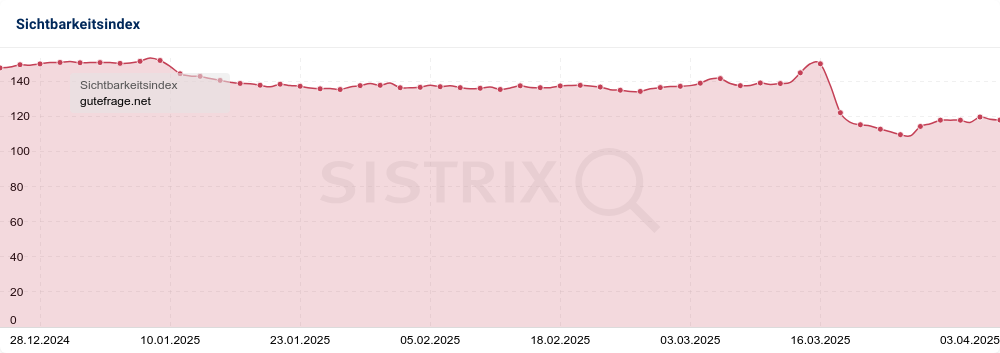
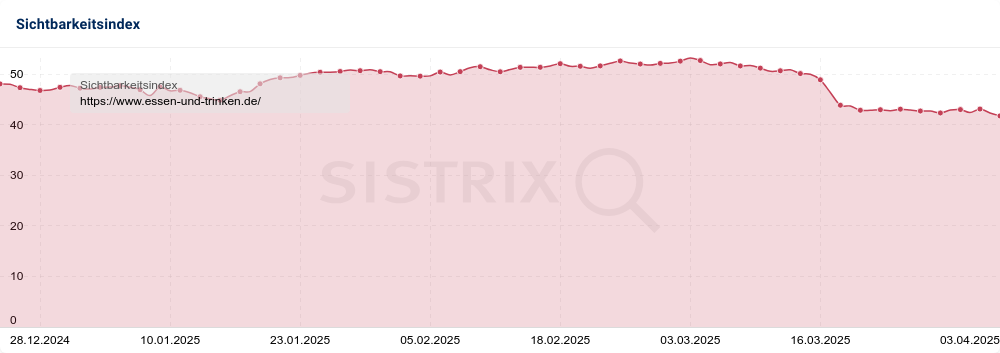
Visibility history of gutefrage.net: The red curve (visibility index - SISTRIX) shows a sharp drop in mid-March 2025, when the core update took effect. Forums such as gutefrage.net, urbia.de and motor-talk.de lost significant Google visibility after the update .
Your Money, Your Life (YMYL) - Health & Finance: In sensitive areas such as Medicine and finance have always been subject to particularly strict quality requirements (keyword E-E-A-T: Experience, Expertise, Authoritativeness, Trustworthiness). This time, too, data shows fluctuations for medical sites. For example MedicalNewsToday.com in the UK around 11 % of its SEO visibility, Cancer.gov about 22 % . At the same time, a health guide such as patient.info increase its visibility by over 60 % . This indicates that within this update, Google will be ranking content with Higher professional authority and trustworthiness while less reliable YMYL pages were devalued - a trend that has already been observed in previous updates (e.g. December 2024). Website operators in the healthcare, finance and legal sectors should therefore pay more attention to Quality, transparency and expertise set.
E-commerce and shopping: Online stores were also affected by the update, albeit unevenly. Some well-known brand stores were able to make gains - in the UK, for example, the visibility of fashion retailers asos.com by approx. 13 % . Also therange.co.uk (+21 %) and dunelm.com (+5 %) were among the winners. In contrast, other e-commerce sites lost ground: Amazon.com lost almost 19 % in the UK index, the fast fashion retailer shein.co.uk around 38 % . Stores with Thin product descriptions or little unique content could have been hit by the update - similar to the December 2024 update, which penalized e-commerce sites with „thin content“. The data suggests that Product pages with added value (detailed information, user reviews, advice) are now doing better, while purely SEO-driven category pages or weak content are losing out.
News & Publishers: News portals and content publishers were No main target, but also experienced shifts. For example. Dailymail.co.uk a slight increase (+13 %) in visibility . On the other hand, a renowned specialist publisher such as Harvard Business Review (hbr.org) in the UK approx. 50 % . Such differences could be related to Paywalls or content structures This may be related to the fact that pages whose content is difficult for Google to access or is highly generic may have been devalued. In general established news websites but continues to be influenced by Google's core updates, especially with regard to Google Discover and the inclusion in Top Stories . Core Updates can also include the Performance in Google Discover (the personalized newsfeed), which is important for publishers.
Overall, it is clear that the March 2025 Core Update had No specific industry target, but changed the rankings “broadband” . However, sites with high-quality, specialized content (e.g. niche blogs with expertise) and strong user loyalty, while platforms with a lot of user-generated or automatically created content tend to lose. Google has apparently rolled out several improvements in a bundle here - some of which took effect immediately, while others were only visible after a new crawl. As a result, there were different phases of change during the two-week rollout until the rankings stabilized.
Effects on visibility, traffic and rankings
The immediate consequences of the update were some drastic Shifts in search engine visibility of many websites. SEO tools registered unusually high rankings from mid-March onwards. VolatilityAccording to the Local SEO Guide, the update period was one of the most turbulent in the last 12 months in terms of fluctuations in search results. SISTRIX confirmed significant movements in the visibility index from March 16 - initially mainly in English-language Google data, but shortly afterwards also internationally .
Specifically, there were clear Winners and losers. Some websites were really „shaken up“: „Some sites have been hit absolutely hard, while others have seen huge increases“, Barry Schwartz of Search Engine Roundtable reported. For example, the question-and-answer platform Quora.com in Great Britain around 22 % of your Google visibility within the two weeks . Large forums in Germany, such as gutefrage.net, fell abruptly by ~15-20 index points (see chart above), which, as experience shows, corresponds to a massive drop in traffic. On the winning side, for example Thesaurus.com (+42 % UK) and the health portal Patient.info (+60 % UK) - such leaps should be reflected in significantly more visitors via Google.
Also well-known brands were affected: Expedia.co.uk lost approx. 28 % visibility, while competitor Booking.com showed fewer losses according to industry observations (an indirect advantage). In the tech sector, sites such as Softpedia.com (~-42 %) and Last.fm (~-26 %) in the UK index . On the other hand, some previously battered sites recovered: SISTRIX showed examples of domains that were able to recoup losses from the December 2024 update . This underlines the fact that core updates are to some extent „turning the tide“ Today's losers were often previously artificial winners and vice versa. Google itself emphasizes that pages that slip, not necessarily have done something wrong - often other, more relevant content was simply rated better. Nevertheless, those affected are naturally looking for solutions.
Those who are affected by significant ranking losses usually also feel Declines in clicks and traffic from organic search. Initial analyses show, for example, that some websites lost double-digit percentages of their organic traffic after the update. Conversely, some winners were able to count on a noticeable increase in visitors. However, there were also voices that felt the update was less drastic than previous core updates - the number of loud complaints in SEO forums was lower than with the previous core update, for example. For many site operators, it is now a matter of evaluating the effects precisely: Which pages or keywords have lost or gained? What patterns can be identified? Based on this, adjustments should be made.
Recommendations for website operators (adapt SEO strategy)

According to Google, after a core update there are „no simple quick fixes“, when rankings fall . Instead of actionist quick fixes, the Focus on long-term quality improvements lie. Here are some specific recommendations on how you can adapt your SEO strategy in light of the March 2025 update:
- Provide high-quality, user-oriented content: Make sure that your content Unique, comprehensive and helpful are. Thin Content (superficial texts without added value) should be cleaned up or improved. Conduct in-depth research and answer the user's search intention in full. Content that contains original information or a special Expertise are rewarded. Use Google's official content quality questions as a guide („Do I offer added value? Is my content trustworthy and expert?“). In short: Implement E-E-A-T - i.e. contributing experience, demonstrating expertise, underpinning authority and creating trust.
- Strengthening authority and trust (E-E-A-T): Present clearly, who is behind your content. Add author profiles with qualifications and update your About-page. Websites without a clear source of information or trust indicators have had a harder time recently. Especially in YMYL themes, you should be able to Professional competence (e.g. through certifications, references or external awards). Equally important is the Trust factorShow user reviews, testimonials, clear contact information and keep your content factually correct and up-to-date. All of this signals to Google that your site is trustworthy.
- Ensure mobile and user-friendliness: Since Mobile-first indexing your website must function perfectly on smartphones. Check loading times (page speed), core web vitals and responsive displays. Slow or poorly usable pages could lose ranking, especially during a core update. A Good user experience (UX) - intuitive navigation, clear headline structure, helpful images/graphics - keeps users on the page longer and sends positive signals. Also make sure that there are no technical problems hindering crawling (see next point). In short: User-friendliness and technology go hand in hand with good content.
- Optimize technical SEO & clean out weak pages: Carry out a technical check of your website. Fix Crawl error, broken links or missing security certificates (HTTPS). Make sure that important pages are indexed correctly and that unnecessary URL parameters are excluded. In many cases, it is also worthwhile Cleaning up old or poor quality contentPages that bring hardly any traffic and offer no added value could damage the overall impression. The update has shown that Google penalizes pages that bring in masses of Programmatically generated or redundant content maintain . Concentrate your website on fewer, but strong pages. Use Google Search Console to identify conspicuous drops of individual URLs and improve or remove them if necessary.
- Use AI-generated content with caution: The focus was once again on automatically generated content. Google has continued to refine its algorithms in order to Recognize and devalue AI-generated texts without added value . If you use tools such as ChatGPT to create content, revise the AI texts carefully. Add human expertise, examples or updates to create a useful article. Also make sure to make AI content transparent (e.g. state „created using AI and reviewed by editors“) to avoid losing trust. Google does not penalize AI usage per se, but the content must be right. Therefore: AI as an aid yes - but Quality control by humans is mandatory.
These measures increase the Overall quality of your website, which is the best basis for achieving medium-term regaining or further expanding rankings . Google itself advises site operators who have been affected by core updates to look at the aspects mentioned above and to evaluate their own content objectively. Patience is also often required: changes to content should only take effect after re-indexing, and real improvements sometimes only pay off completely with the next core update.
Opportunities and challenges after the update
The March 2025 Core Update shows once again that SEO a dynamic field is. This presents companies with both opportunities and challenges:
Opportunities: If you have recognized the signs of the times and have reacted early to High-quality content and strong user orientation you could now be among the winners. Pages that already have good E-E-A-T signals and offer added value have in part benefited from the update. sudden gains in visibility achieved. This offers the opportunity to increase market share in search results and attract new visitors, especially when competitors with lower quality content have fallen. In addition, Google's focus on Creator Content, that also smaller, specialized providers can rank against big brands if their content serves the search queries better. The following therefore applies to companies of all sizes tells authentic stories, shares expert knowledge and offers real solutions, can gain visibility in the course of such updates. The update creates an incentive to invest even more in content quality and specialist authorship - an effort that pays off through Sustainably better rankings can pay off.
Challenges: On the flip side are those who are affected by the update hit hard have been. A loss of Google rankings often means an immediate drop in traffic and potentially fewer leads or sales. The challenge is this, Do not jump to false conclusions to draw conclusions. Individual ranking losses can have complex causes; what is important now is a Thorough analysis. Companies may have to realign their entire SEO strategy - away from quantitative mass and towards qualitative class. This requires time, resources and possibly a rethink of the content process. There are also No guarantee for quick recoveryGoogle often allows several months to pass before the next core update before re-evaluating major changes. Some pages may be not return to their old level if competitor sites now simply provide objectively better content. This can be particularly problematic for business models that are heavily dependent on organic traffic.
Another challenge is the Simultaneous change of search results: Parallel to the Core Update, Google has started to increase AI-supported answers (AI Overviews) directly in the search results . This development - visible for certain knowledge questions, for example - can lead to fewer users clicking on organic results because the answer is already presented at the top. Companies must be prepared for the fact that Snippet optimization and filling niche questions will become more important in order to still receive traffic. All in all, SEO is becoming technically and content-wise more complex, because classic optimization alone is no longer enough. .
Conclusion: The Google Core Update of March 2025 underlines the permanent evolution of search. For website operators, this means, stay on the ball and adapt continuously. Who the Tightening the quality screw and focus strictly on user needs can benefit from such updates - be it through better rankings or the chance to establish themselves as a trustworthy source of information. Companies that have relied on outdated SEO tricks, content assembly lines or unmoderated mass content, on the other hand, are faced with the task of fundamentally rethinking their strategy. In the long term, it pays to invest in Excellence and trustworthiness to invest: Google will continue to roll out updates that reward just that . The challenge is this, and to see change as an opportunity then a core update can even become the starting point for sustainable growth in search.
Sources: Google Search Central, Search Engine Journal, Search Engine Roundtable, SISTRIX, Jaeckert & O'Daniel Podcast, Akif Sahin (SEO Blog)