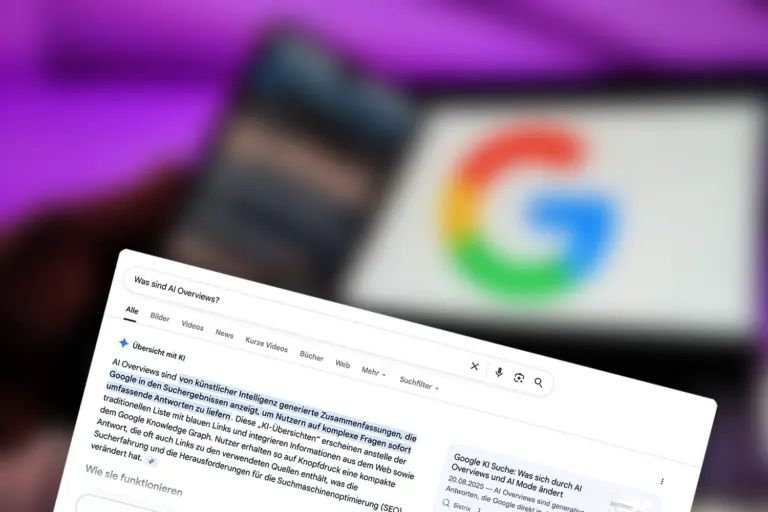
A featured snippet is a highlighted excerpt from a web page that is displayed directly at the top of the Google search results page often referred to as „Position 0“. Its main purpose is to provide users with a quick, concise and direct answer to their search query without them having to click on a web page. Google automatically selects these snippets from websites that the system deems particularly relevant and helpful for the query in question.
Types of featured snippets
Featured snippets appear in different formats depending on what type of information best answers the search query. The most common types are:
- Paragraph snippets: This is the most common format. It provides a short text answer, often between 40 and 60 words, to a definitional or interrogative search query such as „What is X?“ or „Who is Y?“.
- List snippets: These present information in a numbered or unordered list. Numbered lists are suitable for step-by-step instructions or ranked lists, while unordered lists list items in no specific order.
- Table snippets: Data from a website is displayed in a table format, which improves the clarity of comparisons or structured information.
- Video snippets: For queries that require visual explanations, Google can display relevant video clips, often from platforms such as YouTube.
Significance for search engine optimization (SEO)
Featured snippets are highly relevant from an SEO perspective, as they can significantly increase the visibility of a website in search results. A placement in position 0 leads to the content provider attracting the attention of users even before the traditional top 10 results. This can lead to an increased organic click-through rate, even if users already receive the primary answer in the snippet. In addition, a featured snippet strengthens the perceived authority and credibility of a brand or company.
It is crucial for the optimization of featured snippets, Contents clear, concise and directly tailored to specific questions. A logical structure of the content with meaningful headings (e.g. <h2>) and providing answers in easily digestible formats such as short paragraphs, lists or tables increase the likelihood of being selected by Google. The use of structured data (Schema Markup) can help Google better understand the context of the content, although this is not directly required for Featured Snippets, but can improve overall visibility in the SERPs improved.