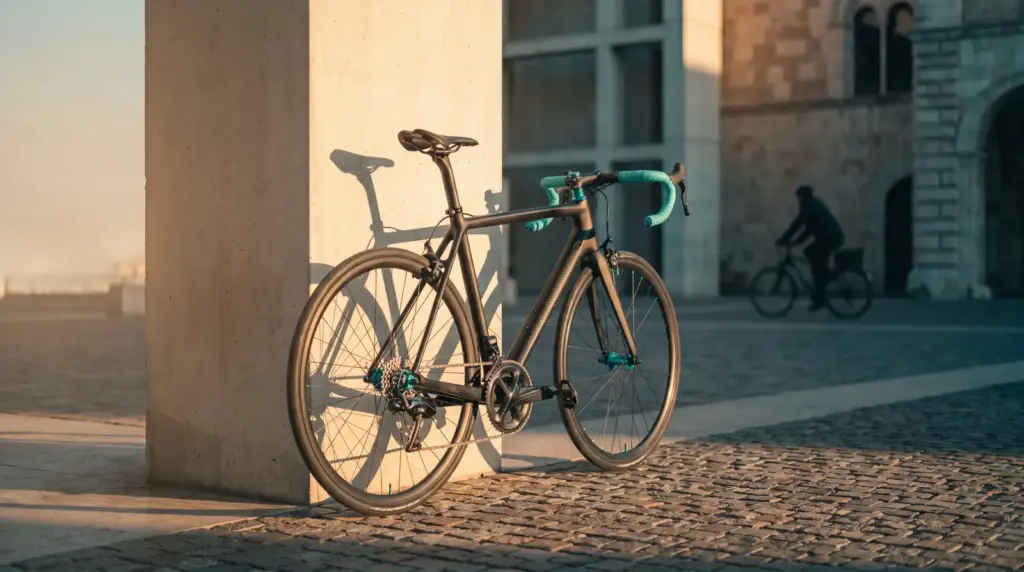

BikePass is CSW.AGENCY’s in-house product: a digital bike pass that allows bikes and e-bikes to be registered online, marked with a QR code and transferred seamlessly when sold. In this article, we take a look behind the scenes of the project – from the initial question through to the technical architecture and the SEO strategy featuring five dedicated landing pages.
Why a digital bike pass?
The figures on bicycle theft in Germany have been sobering for years. According to the 2024 Police Crime Statistics, around 246,000 bicycles are stolen in this country every year – and fewer than 10 per cent of these cases are solved. The German Insurance Association estimates the average cost of a claim at around 1,270 euros per case. Across Europe, estimates suggest that between three and four million bicycles are stolen each year – statistically, seven bicycles disappear every minute in Europe.
A key reason for the low clearance rate is that most bikes cannot be clearly linked to their owners. Anyone who has misplaced their proof of purchase and does not know the frame number will find it almost impossible to prove ownership if the worst comes to the worst. This is exactly where BikePass comes in. Anyone wishing to register their bike can create a digital pass online in just a few steps, including the frame number, photos and proof of ownership – thereby making their bike identifiable.
What BikePass is: Register, app and BikePass ID
BikePass combines three components into a single system. The foundation is the online register, in which every bike is recorded along with its details. Building on this, the BikePass app makes the pass suitable for everyday use: owners manage their bikes digitally, always have their frame number and documents to hand, and can transfer ownership directly to the buyer within the app when selling – a process that used to be surprisingly cumbersome with a paper pass and proof of purchase.

The third component is the BikePass ID: two QR stickers measuring 30 × 30 mm, weather- and UV-resistant, which are permanently attached to the frame. The code visibly links the bike to its entry in the register – anyone who finds it, a buyer or the police can check the bike’s status straight away. The BikePass ID costs a one-off fee of 34.99 euros and is compatible with the ADFC system; registration itself is free of charge. Around 4,500 customers are already using BikePass, and a live counter on the homepage has been documenting the scale of the theft problem in real time since December 2025.
The technology behind it: a React app, WordPress and a custom plugin
Technically, BikePass consists of two distinct components that are deliberately kept separate. The core application – registration, bike management, transfer of ownership – runs as a React app at app.bikepass.eu. The marketing site, bikepass.eu, on the other hand, is a WordPress site with a WooCommerce shop for the BikePass ID.

For the content pages, we opted against using a page builder and instead developed our own WordPress plugin. It renders the marketing and advice pages as versioned templates using our own design system – Tailwind utilities, GSAP animations and centralised design tokens. The advantage: every page exists as code, changes go through a review process, and the design remains consistent across all pages, rather than becoming fragmented in a page builder. Version 2.5 of the plugin now delivers thirteen pages. It’s the same standard we apply as an agency in web engineering to client projects – only this time, it’s for our own product.
SEO as a product strategy: five pages for five search intentions
A product like BikePass isn’t found via brand searches, but via problem-based searches: people Google for protection against theft, for coding and for registration. As an SEO agency based in Düsseldorf, we therefore approached the topic as a keyword cluster from the outset and derived the site structure from this. The result is – in addition to the homepage – four thematic landing pages, each tailored to a clearly defined search intent:
- E-bike owners: High-end pedelecs in particular are attractive targets for theft. The page on e-bike theft protection brings together security measures specifically for e-bikes – from mechanical locks to registration.
- Security-conscious all-rounders: Anyone who wants to know which anti-theft measures make sense for their bike will find an overview of locks, insurance issues and the importance of registration.
- For those interested in bike coding: Many people are familiar with traditional bike coding from ADFC campaigns. This page explains how coding works – and how BikePass translates it into a digital format using adhesive codes.
- Those keen to register: The homepage itself addresses the key search intent relating to registering one’s own bike.

Each of these pages features its own Yoast metadata, an FAQ schema for rich snippets and consistent internal linking – both between pages and back to the registration page. When it comes to content, there’s one strict rule that we recommend to every client: no figures without a source. All statistics on the pages are taken from police crime statistics, the GDV or the bicycle lock test by Stiftung Warentest (issue 3/2025); product details have been verified against the actual product.
“For us, BikePass is both: a product we believe in and a practical laboratory. Everything we recommend to clients – clear information architecture, keyword clusters, verified content – we have to implement ourselves here and prove its worth on the market.”
— Christopher Schwab, founder of CSW.AGENCY
What the project demonstrates
For CSW.AGENCY, BikePass is more than just a side project. It forces us to take our own consultancy work seriously: product positioning, technology and visibility only work in tandem if they are conceived together from the very start. An app alone won’t register any bikes if nobody can find it – and even the best landing page won’t convince anyone if the product behind it doesn’t deliver on its promises.
The next step is already planned: an advice section on bikepass.eu that will continuously explore the topic of bicycle safety in greater depth. And if you’re wondering how your own product or website can be made systematically visible: projects like this are exactly what we do every day – from strategy right through to implementation. The easiest way to get started is to submit a no-obligation project enquiry.