


In 2025, Google has expanded the search function with AI Overviews and AI Mode in which answers appear more frequently before the classic hits. Google describes in Search Central how this AI-features work from the perspective of website operators.
At the same time, paid marketing became more strongly characterized by platform logic: Performance Max received new Control options and more transparency in reporting. What counts for 2026 is whether you turn it into repeatable processes that fit the typical disciplines: SEO/SEA/social, web engineering & UI/UX, hosting/security, AI workflows and brand development.
2025: AI search and ad automation become operationally noticeable
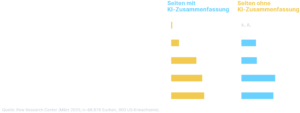
Google has expanded AI Overviews and AI Mode as a new search experience presented; official product information and operator documentation are available. Pew Research has quantified the effect on click behavior: In visits with AI summary, classic results in 8% of cases to one click, without AI summary in 15%.
This changes priorities in SEO: In addition to rankings, it is more important whether content is structured in such a way that it can be used in response areas. correctly quoted and linked become. In the paid area, Google 2025 has communicated additional controls and deeper search insights for Performance Max, including campaign-wide Negative keywords and better search term and topic evaluations.
This fits in with a trend that became visible in many accounts in 2025: Control is less about micromanaging individual placements and more about Goals, Signals, Creatives and Exclusions. If you set up performance marketing as a KPI-driven process, you can use this platform logic - from SEO/SEA to social ads, as is also bundled in typical „KPI-driven performance marketing“ setups.
2026: Search becomes answer space - and source links become more important
The key question for 2026 is: How does a brand remain visible when users consume answers directly on the search page? To this end, Google is working on more and better visible Source links in AI mode.
For your content planning, this means: content needs passages that answer a question. in a few sentences answer precisely, plus Receipts, Actuality and clear Responsibility (author/date). The operator documentation emphasizes the view from the website perspective and provides Guard rails for inclusion.
2026 will also be a year in which publisher interests and platform interests collide more strongly. The EU has adopted a Investigation on Google's use of publisher content for AI features; this increases the pressure on transparency and attribution. For brand communication, this practically means that a solid brand presence (positioning, consistent messages, visual guidelines) has a direct impact on recognition in search, social and review environments - and is therefore not just a „design issue“, but a Performance theme.
Performance marketing becomes input engineering
In 2026, whoever feeds automation cleanly will win: Clean conversion definitions, a resilient event model, Consistent product data and a Creative system with variants that test let. Google describes channel performance reporting for Performance Max as a way to better understand results across inventories.
This is the operational bridge between SEA/shopping, social ads, retargeting and funnel setups that typically converge in performance marketing packages.
Prioritize measurement setupEvents, conversions, offline signals, consent and clean naming logic as a common standard.
Systematize campaign managementNegative keywords, brand rules, target group signals and asset governance as a fixed process.
Treat Creative as a test objectfew core ideas, many variants, clear learning questions per sprint.
Define cross-channel routingWhen search harvests, when social builds, when retargeting closes.
Web, data and trust run as a business
In 2026, the website will become even more of an operating system: it must fast, safe, maintainable and trackable because content, ads and AI features would otherwise come to nothing. In web engineering setups, security & maintenance and ticket systems are described as a permanent service; this is the appropriate logic when marketing activities go live on a weekly basis.
Also: Because Reputation has a direct conversion effect, a separate process for evaluation and reputation management is worthwhile.
Standardize web operationReleases, maintenance, backups, security, performance monitoring, tracking checks as a fixed routine.
Anchoring AI in the marketing processContent creation, text-to-media and workflow automation as a controlled production line, not as an individual case.
Keep the brand consistentPositioning, corporate design, messages and guidelines as the basis for every landing page and every ad creative.
FAQs on the 2026 outlook
What will change in SEO in 2026 if AI overviews reduce clicks?
They plan SEO more as an „answer architecture“: questions defined per topic, short core answers, criteria and sources. Pew shows the difference in clicks (8% vs. 15%) for AI summaries; thus citation in answer spaces gains visibility value in its own right.
Which content formats will work best for AI Mode in 2026?
Formats with high extractability: clear definitions, step sequences, comparison criteria, FAQ blocks with evidence and updates. Google documents AI features from an operator perspective and provides information on inclusion.
How do you control Performance Max 2026 better than „just letting it run“?
They use the additional controls (e.g. negative keywords) and regularly check channel performance instead of just looking at overall results. Google has emphasized exactly this direction in 2025: more control and more reporting depth.
Why will first-party data work remain central in 2026?
Google's course on third-party cookies remains flexible; Reuters describes that Google is not introducing a new standalone prompt and is sticking to previous settings. This makes clean first-party signals, consent and CRM integration a stable foundation for measurement and optimization.
What role do transparency rules play for Ads 2026, especially for social?
In 2025, the EU Commission made TikTok subject to obligations for advertising transparency under the Digital Services Act, including ad repositories. This increases the demand for clean labeling, documentation and traceable targeting logic in campaigns.