Shopify SEO and what you can do yourself

Shopify takes care of sitemaps, canonical tags and robots.txt for you. However, shops still lose visibility in three areas: duplicate product URLs, filter pages and app-related issues. Here’s how to keep them under control.
google.com/gotos are changing the way you measure your rankings
Since the end of August, Google has been inserting an intermediate step between the search result and the landing page. For searchers, the click remains the same; for SEO tools, however, the workload behind the scenes has multiplied. Anyone tracking rankings will find themselves facing longer waiting times as a result.
SEO Costs in 2026: What You Can Realistically Expect

SEO costs vary greatly: some quotes start at 500 euros a month, whilst others are around 5,000 euros. The difference depends on the scope of the work, the level of competition and the condition of your website. We’ve categorised the most common pricing models and set out the figures you can expect.
The BikePass Project: A digital cycling pass for Europe

An insight into the CSW BikePass project: How 246,000 bicycle thefts a year led to the creation of a digital bike pass featuring an app, QR coding and an SEO strategy.
Why multi-AI consensus is the next step in supplier selection
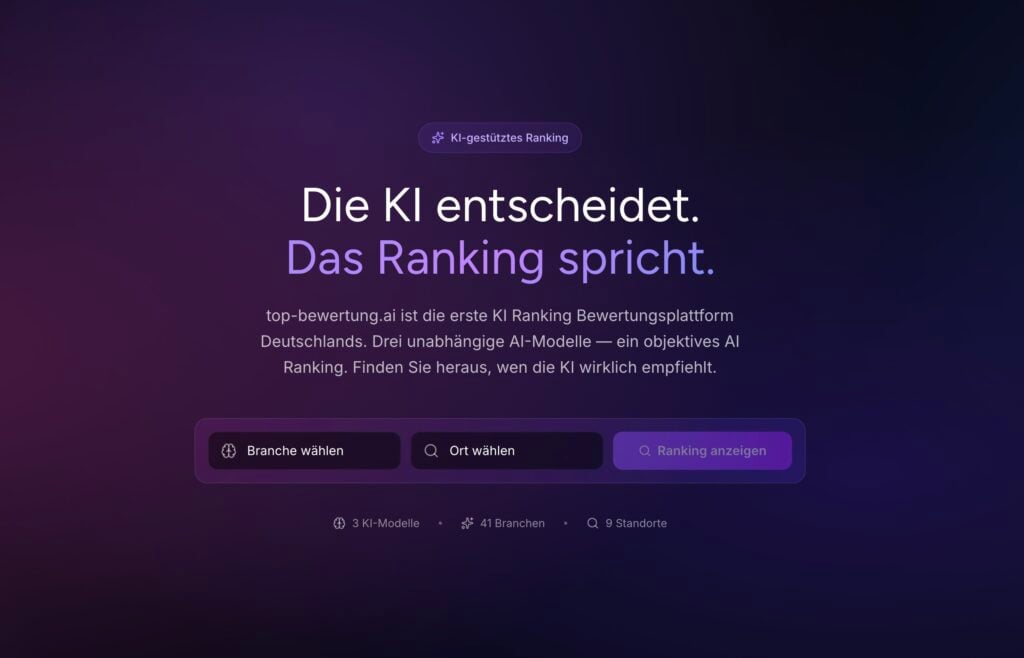
More and more people are asking ChatGPT rather than Google for the best provider. How multi-AI consensus makes rankings more transparent – using Top-Bewertung.ai as an example.
Google March 2026 Core Update: Interpreting volatility correctly

In just under four weeks of rollout, the March 2026 Core Update has thoroughly shaken up the SERP landscape. Industry trackers reported the most significant fluctuations in months – and anyone who reflexively rewrote content and tinkered with site structures in the first few days is likely to be regretting it now. You can only distinguish between cause and effect if you measure first and act afterwards.
Beyond Keywords: Rethinking content relevance

Wer seine Inhalte noch hauptsächlich nach Keyword-Dichte ausrichtet, hat die letzten zwei Jahre verpasst. KI-Agents und Search Generative Experience haben verändert, wie Inhalte bewertet, gefunden und zitiert werden. Content-Relevanz bedeutet heute etwas anderes als noch 2022.
AI browsers: Atlas, Comet – is this the future of web browsing?

Viele Nutzer arbeiten heute schon mit einem doppelten Setup: Im einen Tab läuft der Browser mit zig geöffneten Seiten, im anderen Tab ein KI-Tool wie ChatGPT oder Perplexity, das Inhalte erklären oder zusammenfassen soll. KI-Browser setzen genau dort an und bauen diese Assistenz direkt in den Browser ein. Die Seiten werden weiterhin ganz normal geladen, aber parallel „liest“ eine integrierte KI mit, hilft beim Einordnen, Verdichten und Vergleichen von Informationen und kann – je nach Lösung – auch einfache Schritte im Web unterstützen. Die Spannbreite reicht von klassischen Browsern mit zusätzlicher KI-Funktion bis hin zu AI-first-Browsern wie Atlas oder Comet, die von Anfang an so konzipiert wurden, dass die KI-Ebene den Kern der Nutzung bildet.
Structured data in SEO and AI searches

Structured data is no longer just an add-on, but a central element of digital marketing. It helps machines to interpret content correctly and link it together. AI search systems can use structured data to better categorise content or to verify which information is reliable and to which entity it belongs. This increases the likelihood of content appearing in AI responses. There is no guarantee of this, however – quality, trust and technical stability remain crucial.
Google is rolling out AI Mode in Germany

Der Google AI Mode verändert die Suche spürbar: weg von Einzelfragen, hin zu einer geführten Klärung mit nachvollziehbaren Quellen. Wer Inhalte veröffentlicht, sollte Antworten klar strukturieren und interne Pfade zu vertiefenden Themen anbieten. Wer sucht, bekommt schneller Orientierung – und behält die Kontrolle über die Informationen.