
The statement was made in March 2026 in a TBPN-Interview, that Fortuna Aufgriff. Karp Leitet Palantir Technologies, ein auf Big Data a specialized company with a market capitalization of around 433 billion dollars that works with US intelligence agencies and governments worldwide, among others. He himself has spoken openly about his dyslexia for years—and this combination of tech background and personal experience with neurodivergence lends substance to his thesis. His judgment in his own words: „There are basically two ways to know you have a future. One, you have some vocational training. Or two, you’re neurodivergent.“
Craftsmanship beats a university degree.
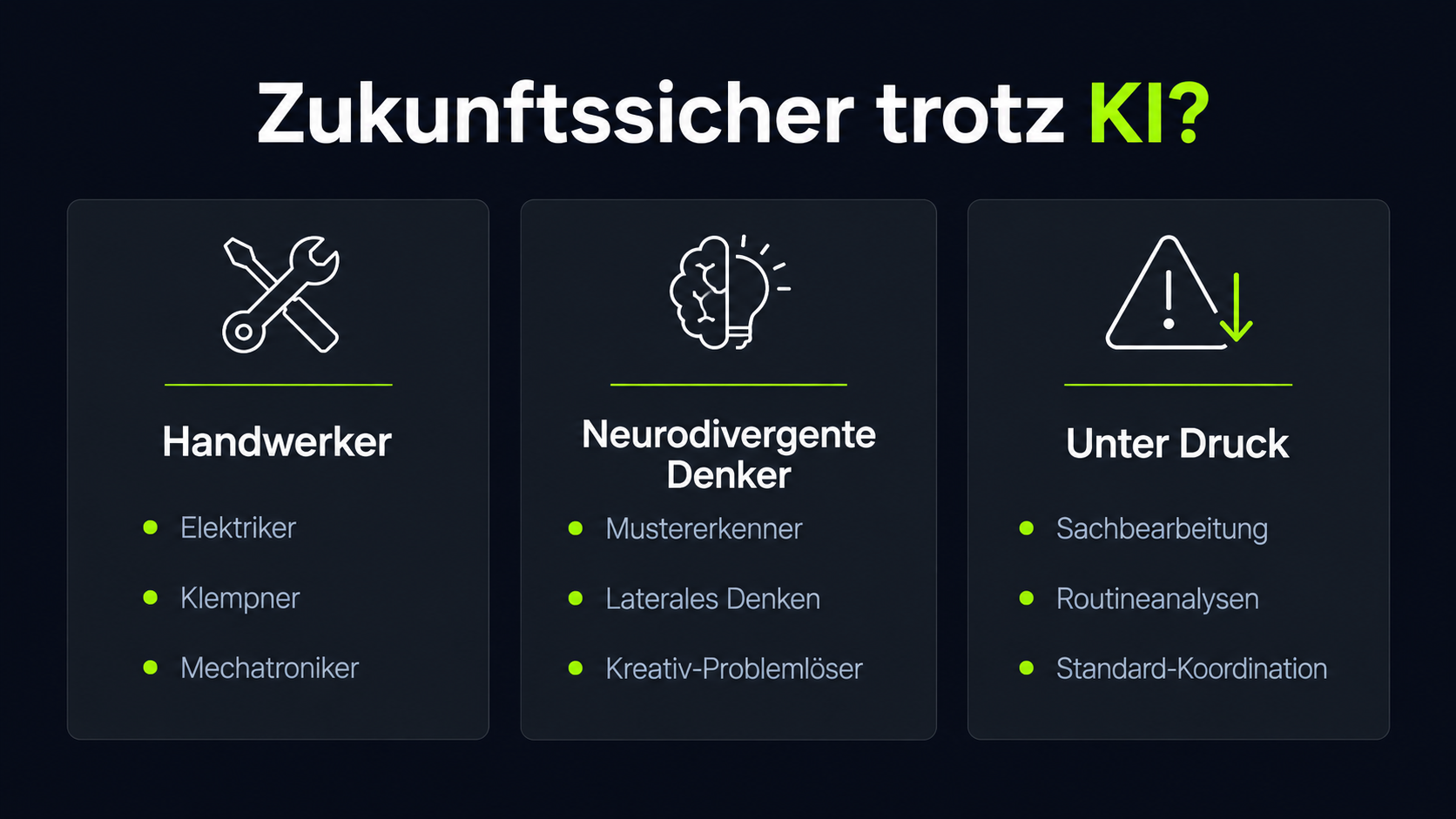
Karp's first category is tradespeople: electricians, plumbers, technicians, mechatronics engineers. Professions where you don't simply state a task and accept the result, but are physically present, assess situations spontaneously, and deal with physically unpredictable conditions. It is precisely this combination that makes them difficult for automated systems to access — AI needs structured inputs; craftsmanship lives from the opposite.
If office work with defined processes is the first to AI automation falls, market value shifts in favor of professions that require physical judgment and situational response. In addition: The shortage of skilled workers in trades was real and persistent even before the AI debate. This shortage will remain, according to assessments, making the supply of qualified skilled workers Newsweek not bigger - on the contrary.
Neurodivergence as a Structural Advantage
Karp's second group is more surprising: people with ADHD, autism, or dyslexia. His argument is less diagnostic and more functional. Neurodivergent think in different patterns, recognize connections that rule-based systems overlook, and come up with solutions that lie outside the statistical norm. Karp describes this as „more like an artist“ — someone who looks at things from a different angle and builds something that cannot be predicted.
This remains more than theory. According to a study by Gartner By 2027, a fifth of all Fortune 500 sales organizations will actively recruit neurodivergent employees to enhance their competitiveness. Palantir itself has the Neurodivergent Fellowship established — a program that specifically targets unconventional thinkers and, according to its own statement, aims to attract people who will play a disproportionate role in shaping the future. Those who think differently from the average suddenly have the upper hand in this context.
What's actually under pressure in the AI job market
Rivers These describes where value is created—and where it erodes. The greatest pressure for change is felt by the classic White-Collar-Area: Administrative processing, routine analyses, standardized coordination tasks with defined inputs and predictable outputs. According to the World Economic Forum will be tens of millions of jobs worldwide by 2030 due to automation and Artificial intelligence transformed — while at the same time new roles are emerging that require different qualifications.
What remains human in this environment:
- Physical Situation Assessment in unstructured environments (craftsmanship, nursing, emergency care)
- Creative lateral thinking beyond training data-based predictions
- Emotional Intelligence in direct person-to-person communication
- Ethical judgment in decisions with societal implications
- Entrepreneurial risk appetite — act on incomplete data and take responsibility
What this means specifically for your career path
Karps has these blind spots: His view is heavily shaped by American perspectives, and neurodivergence is not a blanket advantage — it depends on the specific job profile. Nevertheless, there's a useful idea within it. Those who derive their value solely from tasks that AI can perform faster and cheaper today are on thin ice in the medium term. That is the most honest interpretation of this thesis — regardless of one's stance on Karp.
A few questions that are really worth considering:
- Does your core work mainly consist of routine tasks with defined inputs and predictable outputs?
- Could a well-configured AI cover most of your typical workday?
- Do you bring strengths that are hard to capture in rules and algorithms—craftsmanship, empathy, unconventional problem-solving?
- Have you built up competencies that require a physical presence or contextual judgment?
Those who answer the first two questions with "yes" and the last two with "no" have concrete reason to realign their personal development.
FAQs on Karp's Thesis about the AI Labor Market
What did Palantir CEO Alex Karp say about the AI job market?
In a TBPN interview in March 2026, Alex Karp stated that in the AI age, there are „basically two ways to know you have a future“: vocational training or neurodivergence. The statement sparked a broad debate about job security and the future of the labor market.
Why are skilled tradespeople structurally at an advantage in the AI job market?
Skilled trades require physical presence, situational judgment, and the ability to respond to unstructured conditions – skills that AI systems have so far been unable to replicate effectively. At the same time, demand for skilled workers in this field is growing while supply is stagnating.
What does neurodivergence mean in the context of the AI debate?
Neurodivergent individuals—such as those with ADHD, autism, or dyslexia—often think in different patterns and recognize connections that remain hidden in standardized systems. Karp sees this as a genuine advantage in a time when creative and unconventional thinking is gaining market value.
Which professions are most at risk from AI automation?
Activities with defined inputs and predictable outputs are coming under the most pressure: administrative tasks, routine analyses, standardized coordination tasks. These areas can be automated particularly efficiently because they require little contextual judgment.
What is Palantir's Neurodivergent Fellowship?
The Neurodivergent Fellowship is a recruiting program by Palantir Technologies that specifically targets neurodivergent applicants. Palantir sees unconventional thinkers as a strategic advantage and launched the program with the goal of attracting individuals who play a disproportionate role in shaping the technological future.