


Why is backlink analysis important?
Search engines like Google use Backlinks, in order to Authority and relevance of a website. Many high-quality backlinks lead to a better ranking in the search results. This means more visitors, more potential customers and ultimately more sales. The backlink analysis helps you to recognize the strengths and weaknesses of your link profile.
This allows you to take targeted measures for optimization. It also allows you to Link building-Analyze your competitors' strategies and learn from their successes.
A study by Backlinko from 2025 shows that around 95% of all websites no backlinks own. This illustrates how difficult it is to obtain high-quality backlinks, which are essential for search engine optimization (SEO). Here you can find more statistics. In Germany, backlink analysis is particularly important because competition in online marketing is very high.
Companies and SEO experts use tools such as Sistrix, Ahrefs, Semrush and SE Ranking, to analyze backlinks and develop appropriate strategies. Ahrefs is known for its precise data and is preferred by many SEOs.
What makes a good backlink?
Backlinks are not all the same. A backlink from a well-known and reputable website counts significantly more than a link from an unknown or dubious site. Various factors influence the Quality of a backlink:
Domain Authority: The authority of the linking domain is crucial. Links from websites with a high domain authority are rated higher by search engines.
Relevance: The backlink should be thematically relevant to your website. A link from a website about gardening is of little use to a website about financial services.
Anchor Text: The text used in the link (anchor text) should be relevant to the topic of your website.
Dofollow vs. nofollow: Dofollow links pass on link juice, nofollow links do not. Dofollow links are more important for SEO.
With the backlink analysis, you can evaluate the quality of your backlinks and identify harmful links. This allows you to optimize your link profile and improve your rankings. The analysis also shows you which link building strategies of your competitors are working. You can use these findings for your own strategy.
The right analysis tools for real results
The combination of different tools can significantly improve backlink analysis. For example, the data from Ahrefs for identifying backlinks can be combined with the analysis functions of Sistrix for evaluating link quality.
This approach enables a more comprehensive understanding of the link profile. By using different databases and algorithms, weaknesses of individual platforms can be compensated for.
Comparison of the top tools for backlink analysis
Tool | Database size | Update frequency | Pricing model | Special strengths |
|---|---|---|---|---|
Ahrefs | Very large | Daily | Subscription | Extensive data, detailed analysis |
Semrush | Large | Regularly | Subscription | Versatile functions, keyword research |
SE Ranking | Medium | Regularly | Subscription | Price-performance ratio, monitoring |
Sistrix | Large | Weekly | Subscription | Visibility index, link evaluation |
The table shows that each tool has different strengths and is suitable for different purposes. The choice of the right tool depends on the individual requirements.
The right combination of analysis tools is crucial for successful backlink analysis. By skilfully using different platforms and visualizing the data obtained, companies can optimize their SEO strategy and remain competitive in the online market.
From quantity to quality: re-evaluate your link profile
 It is no longer enough to simply collect as many backlinks as possible. In today's search engine marketing, the focus of a Backlink analysis on quality. A strong link profile consists of relevant and trustworthy links that strengthen your website in the long term.
Recognize and remove potentially harmful links
In addition to the evaluation of positive signals, the identification of toxic backlinks essential. These often come from dubious sites or link farms and can damage your ranking. Tools like Ahrefs or Semrush help to identify such links. With the Disavow tool You can declare harmful links invalid by Google.
By regularly analyzing and removing harmful backlinks, you can protect your website from being penalized by search engines. A clean link profile is particularly important in the competitive online market.
Prioritization and strategic approach
After analyzing your backlinks, you should Link building strategy customize. Concentrate on generating high-quality backlinks from relevant websites.
Here are some tips for building high-quality backlinks:
Create high-quality content: Content with real added value is linked more frequently.
Publish guest posts: Write guest posts on thematically relevant websites and link to your own site.
Network with influencers and experts: Build relationships with influencers and ask them to link to your content.
Analyze the competition: Find out where your competitors get their backlinks from.
We as SEO agency in Düsseldorf are happy to support you with the Backlink analysis and the development of an individual Link building strategy. Get in touch with us for a non-binding consultation. We will help you optimize your link profile and improve your visibility in the search results.
Competitor analysis: The link strategies of the industry leaders
A thorough backlink analysis not only looks at your own link profile, but also that of your competitors. The Link strategies of your competitors provide valuable information on successful practices and untapped potential. In this section, you will learn how to analyze the backlink strategies of your competitors and use them for your own SEO strategy.
Identify and analyze the competition
The first step is to identify the most important competitors. Which companies rank at the top for your relevant keywords? Tools like Ahrefs or Semrush help you find the relevant competitors and analyze their backlink profiles. Concentrate initially on 3-5 direct competitors, to keep the analysis manageable.
Determine backlink sources of the competition
Use the analysis tools mentioned above to identify the backlink sources of your competitors. Pay particular attention to recurring patterns. Where do most backlinks come from? What kind of websites link to the competition? Are they industry blogs, news portals, forums or other sources? This will tell you about effective link building strategies. For example, you might find that guest posts on relevant blogs play an important role.
Quality assessment of backlinks
Not every backlink is of equal value. The Quality of competitor backlinks is crucial. Pay attention to the Domain Authority of the linking pages. A backlink from a website with a high authority is more valuable than a link from an unknown site. Also check the Relevance. A thematically appropriate backlink is more effective.
Gap analysis: discovering untapped potential
The Gap analysis is a central component of the competitor analysis. Compare your link profile with that of your competitors. What backlinks do your competitors have that you don't? These Link gaps reveal untapped potential for your link building strategy. For example, you might discover that a competitor has many backlinks from an industry blog on which you are not yet represented.
Metrics | Meaning | Interpretation | Recommendation for action |
|---|---|---|---|
Number of backlinks | Total number of links | Gives an initial overview, but says nothing about the quality. | Don't just focus on the number, but on the quality. |
Domain Authority (DA) | Strength of the linking domain | The higher the DA, the more valuable the backlink. | Prioritize backlinks from domains with high DA. |
Relevance | Thematic fit of the linking page | Backlinks from relevant pages carry more weight. | Concentrate on thematically appropriate backlinks. |
Anchor text | Link text used | Should be relevant and natural. | Use keyword-rich but natural anchor text. |
Link gaps | Backlinks that the competition has, but you don't. | Highlight unused potential. | Develop strategies to close these link gaps. |
The table shows that, in addition to quantity, the quality of the backlinks is particularly important. A high domain authority and thematic relevance are important factors.
Adapting successful strategies
After you have analyzed the link strategies and identified link gaps, use these findings. Which successful strategies can you adapt? Which link sources can you tap into? The analysis allows you to optimize your link building strategy and improve your rankings.
Competitor analysis is an ongoing process. Monitor your competitors' link strategies regularly in order to recognize changes and trends at an early stage and adapt your strategy accordingly.
Recognize backlink patterns and use them strategically
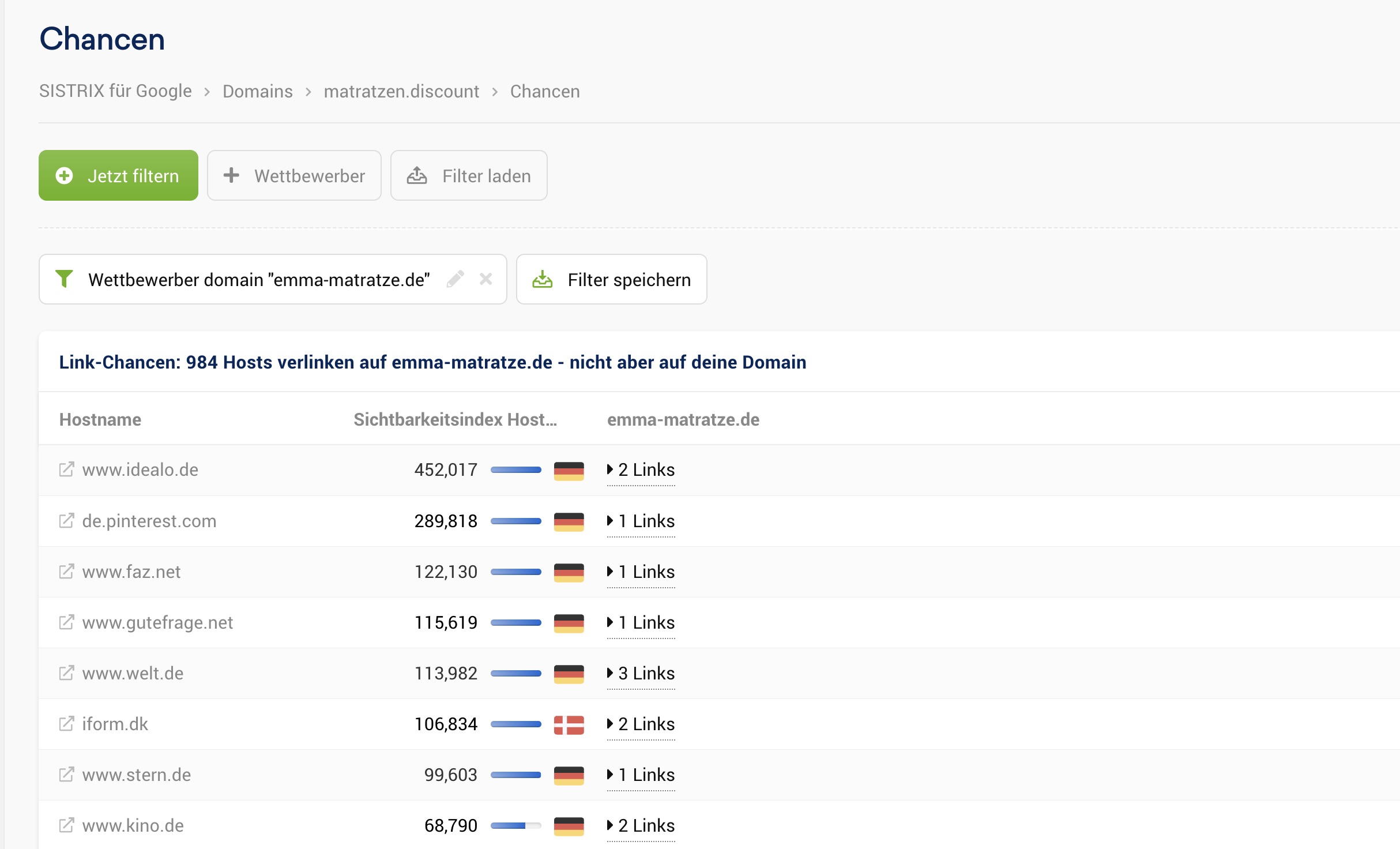
A strong link profile does not develop on its own. It follows patterns and trends that require a detailed Backlink analysis makes them visible. Those who specifically want to Backlink building has found the key to sustainable SEO success. In the following, you will learn how to identify these patterns and make them work for your company.
Recognize seasonal influences and industry trends
Backlinks are subject to seasonal fluctuations. An online store for garden furniture naturally receives more backlinks in spring than in winter. Industry trends also influence link development. One Backlink analysis helps to understand and correctly classify these fluctuations.
This will help you avoid misinterpretations and adapt your strategy to seasonal conditions. In winter, for example, you could focus more on evergreen content that is relevant all year round and can generate backlinks.
Analyze changes in the link profile
A sudden increase or decrease in backlinks always has a cause. An increase can indicate a successful PR campaign. A drop can be caused by technical problems or negative press.
With a Backlink analysis identify these changes and investigate the reasons. This allows you to react quickly and take countermeasures. In the event of a sharp decline, you can use tools such as Ahrefs or Semrush to analyze the lost backlinks and try to win them back.
Set up an early warning system for problems
The Backlink analysis also serves as an early warning system. A high proportion of backlinks from low-quality websites can indicate an imminent penalty from Google. Regular analyses help to recognize such developments at an early stage.
If you identify toxic backlinks, you can remove them with the Disavow tool from Google declare invalid.
Data visualization for a better overview
Visualization techniques are suitable for presenting complex data in an understandable way. Tools such as Google Data Studio or Tableau allow you to create clear dashboards. This allows you to keep an eye on the most important key figures and make data-based decisions.
For example, a dashboard can visualize the development of backlinks, the domain authority of the linking pages and the distribution of anchor texts.
From data collection to strategic action
Prioritization of the analysis results
After the backlink analysis, you have a wealth of data at your disposal. The most important findings need to be filtered out and prioritized. A Clear decision-making framework helps you to choose between quick successes and long-term structural improvements to distinguish.
Quick successes: Measures with little effort and short-term positive effects. Examples: Repairing broken links, optimizing anchor texts.
Long-term structural improvements: These measures require more time and resources, but pay off in the long term. Examples: Building high-quality backlinks through Content marketing or cooperations.
Holistic SEO approach
Integrate the findings from the backlink analysis into a holistic SEO approach. This means taking into account both technical and content-related aspects.
Technical SEO: Optimization of the website structure, loading times and mobile display. The backlink analysis can provide indications of technical problems that affect link quality.
Content SEO: The focus is on creating high-quality and relevant content. The backlink analysis helps to identify topics that have the potential to generate many backlinks.
By combining technical and content SEO, you maximize the effect of the backlink analysis.
Acting instead of just analyzing
The Backlink analysis is not an end in itself. Turn the data you collect into concrete measures. This is the only way to optimize your link profile and improve your visibility in the search results - only by Build backlinks.
The most important findings for sustainable success
A well-founded backlink analysis is not a one-off project, but an ongoing process. Only by regularly reviewing and adjusting your strategy can you remain competitive and ensure your long-term success. This section summarizes the most important findings and provides you with an action plan for sustainable backlink management.
Action plan for different website sizes
The optimal approach to backlink analysis also depends on the size of your website. Here is a brief overview:
Small websites/startups: Concentrate initially on building the first high-quality backlinks from relevant pages in your niche. Use guest posts or cooperations with other companies.
Medium websites: Analyze your existing backlinks and identify weak points. Concentrate on improving the Link quality and the closing of Link gaps to the competition.
Large websites: Monitor your link profile continuously and react quickly to changes. Rely on advanced analysis methods and develop a comprehensive Link building strategy.
Success indicators for your backlink analysis
To measure the success of your measures, you should keep an eye on the following key figures:
Visibility in the search results: Are your rankings for relevant keywords improving?
Organic traffic: Is the number of visitors who reach your website via search engines increasing?
Domain Authority: Does the authority of your domain increase over time?
Number and quality of backlinks: Is your link profile growing and is the quality of incoming links improving?
Common pitfalls and how to avoid them
Many companies fall into the same traps when it comes to backlink optimization. Here are some tips on how to avoid them:
Focus on quantity instead of quality: Concentrate not only on the number of backlinks, but above all on their quality. A high-quality backlink from a relevant page is more valuable than many links from dubious pages.
Ignore toxic backlinks: Harmful backlinks can damage your ranking. Identify and remove them regularly.
Neglect of competitor analysis: Analyze your competitors' link strategies to discover valuable insights and opportunities.
Lack of adaptation of the strategy: The online market is dynamic. Adapt your link building strategy regularly to new developments and trends.
Build long-term link relationships
One-time generated backlinks do not offer a sustainable advantage. Concentrate on building long-term relationships with other websites in your industry.
Cooperations: Work together with other companies to realize joint projects and link up with each other.
Content marketing: Create high-quality content that is relevant to your target group and naturally attracts backlinks.
Community building: Get involved in relevant online communities and build relationships with other users.