


There are two parallel dynamics behind the figures: a deeper integration of Helpful-Content-signals into the core algorithm and - at the same time - significant movements in the AI Overviews (Google SGE). There is also a factor that visibility data often obscures: many losses are caused by new SERP elements that simply push organic hits down - without the page itself losing quality. Those who keep the two apart prioritize better.
What volatility data really measures - and what it conceals
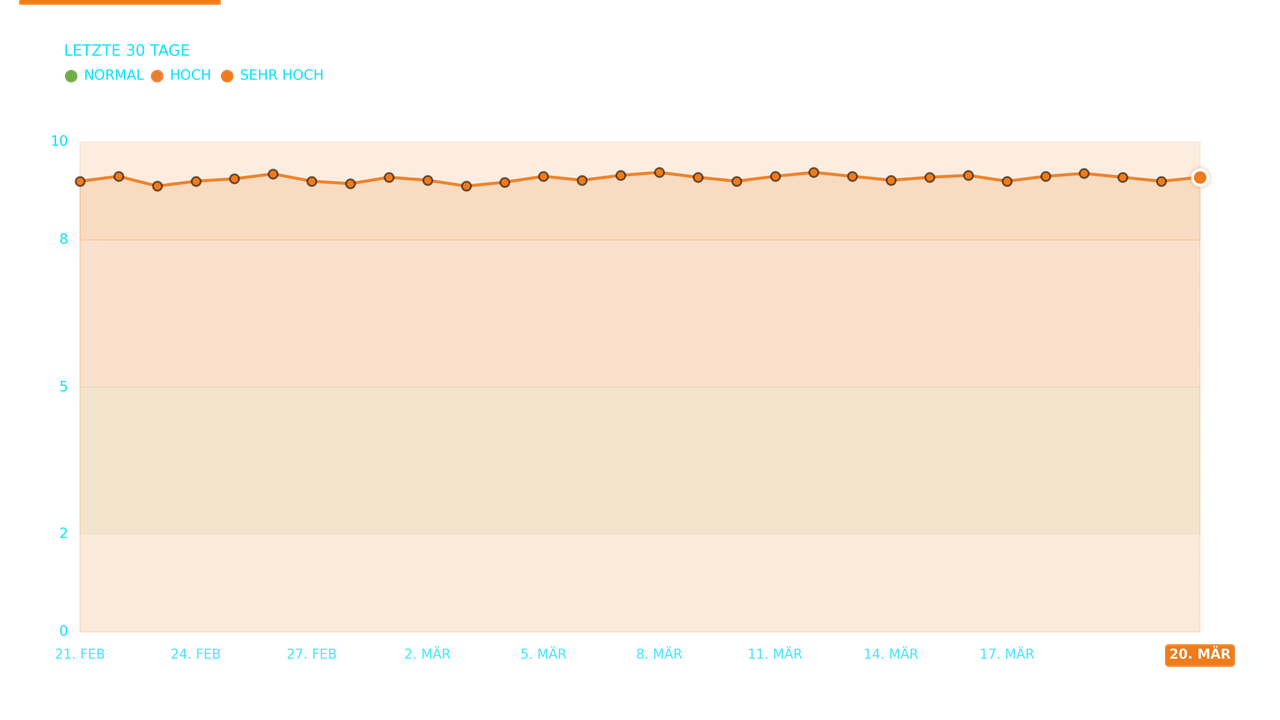
Rank-delta analyses calculate how strongly keyword positions fluctuate on a daily basis. Tools that evaluate hundreds of thousands of SERPs every day registered unusually high fluctuations during the rollout period from March 10 to 27. For Semrush the peak value was 9.3 out of 10 - officially classified as „It's a Googlequake“. This shows the breadth of the movement, but says nothing about the cause in individual cases.
The decisive blind spot: If Google places new interfaces such as discussion modules, product boxes or local packs more prominently, organic hits lose click shares - even without a recognizable change in position. A formal rank of 3rd place can suddenly be replaced by four new SERP features disappear. Anyone who only reads ranking data and ignores SERP screenshots is diagnosing the wrong object.
Winners, losers and the pattern behind them
Specific visibility data is available from the UK market. Notonthehighstreet.com gained around 56%, uniqlo.com even around 76% - both with clearly structured category and product pages that serve selection needs. Platforms such as Reddit and Yelp also benefited because they bundle real user perspectives and a high degree of topicality across a broad spectrum.
On the losing side, one case is particularly instructive: the British tax authority hmrc.gov.uk is said to have lost over 50 percent of its visibility at times. Authority alone does not protect, when users are looking for quick answers or concrete step-by-step processes and an authority site provides complex navigation paths instead. The same principle applies to Zara (-24%) and Amazon (-14%) in the same market: when Google recalibrates the fit to search intent, domain size plays a subordinate role.
Programmatic content under the algorithmic microscope
Core phases are the stress test for domains with thousands of programmatically generated landing pages - „city + service“, „product + category + variant“ with minimal differences in content between the URLs. If 5,000 pages essentially say the same thing, the algorithm selects more rationally: a few strong URLs survive, the rest lose. Bluettipower.com was cited in industry reports as a concrete example - mass-produced pages without substantial content per URL. At the same time, forums such as DIYChatroom and GarageJournal lost significant ground despite strong gains in the previous year - according to Moz an indication that Google prefers to answer the same search queries via other interfaces if the thread quality is insufficient.
Typical reasons why domains lose visibility in core phases:
- Programmatic content with thousands of similar URLs without clear added value per page
- Unclear search intent: Sites that cover too many topics at once often only half answer the specific need
- Trust deficits: missing author details, thin contact information, inconsistent company data
- SERP-displacement through discussion modules, product grids or Local SEO-packs that push organic hits to the bottom
- Quality dispersion: Strong content loses weight if it is surrounded by many weak URLs on the same domain
Diagnosis first, measures afterwards
The biggest mistake after a core update is actionism. Teams that have titles at the same time in the first few days, Internal linking and text blocks lose the ability to separate cause and effect. Google itself recommends drawing conclusions only after the rollout has been completed. The end of the March 2026 rollout on March 27 marks a clear caesura: movements before are rollout noise, movements after form the new basis.
Practical steps for the first 14 days:
- First 48 hours: Rankings, clicks and impressions from the Google Search Console Save and take SERP screenshots for affected keywords
- Day 2-3: Sort pages into clusters - guides, category pages, programmatic URLs, community content
- Day 4-7: Compare top loser clusters with the actual search intention and formulate a hypothesis for each, e.g. „Category does not serve selection needs“ or „Thread quality too heterogeneous“
- Day 8-14: Implement one pilot measure per cluster - targeted, one after the other
- Continuous: Check whether SERP elements such as local packs, product grids or discussion modules deduct organic click shares - and whether the loss of visibility is algorithm-related at all
This is an aspect that is often overlooked in practice: Not every decline is detrimental to business. If you lose generic keywords but keep product-related search queries stable, you can improve your Conversion rate even increase it. The benchmark for reactions is business value - visibility is the means, not an end in itself.
FAQs on the Google March 2026 Core Update
When was the rollout of the March 2026 Core Update completed?
The rollout started on March 10, 2026 and was officially completed on March 27, 2026. Analyses based on this end date provide more reliable conclusions than snapshots taken during the ongoing rollout.
What does SERP displacement mean - and how does it differ from a ranking loss?
A loss of ranking means that Google classifies the page as less relevant for a search query. SERP displacement means that new interface elements such as discussion modules or local packs push the organic hits down - even though the page has formally maintained its position. Both causes require different reactions.
Why did hmrc.gov.uk lose so much visibility despite its high authority?
Authority alone does not protect against loss of visibility if a page does not optimally serve the search intent. Authority sites with complex navigation paths can lose out on queries where users expect quick answers or specific step-by-step instructions.
Which page type is most at risk from the March 2026 Core Update?
Domains with thousands of programmatically generated pages without substantial content per URL and community pages with low thread quality and a high duplicate rate are most affected. Sites that clearly and demonstrably serve search intentions behave more stably.
How long does a recovery take after the March 2026 Core Update?
Core update recoveries are a process over several months. John Mueller from Google confirms that content improvements can take effect between updates, but are recognized gradually. Those who systematically follow the diagnostic framework are in a much better position for the next update.